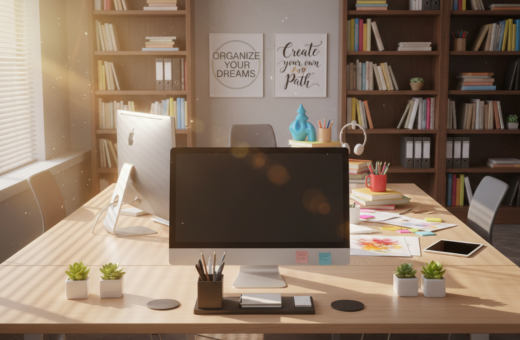
Since the original post on 02/22/2023 and the 07/31/2025 update, the idea of a tidy workspace has shifted. A clear space and smart purpose help people reduce stress and cut distractions. This change supports higher productivity and a calmer office environment.
By removing excess items and limiting clutter on the desk, they reclaim time and focus for deep work. Fewer things on the surface make it easier to switch tasks and keep a steady rhythm during the day. Many follow a simple routine or a minimalist desk routine to lock in a reliable 90-minute focus block.
The modern way of minimalism in the home office shows that the physical environment shapes how quickly tasks get done. When each item has a place, life feels ordered and work moves faster with less stress and fewer distractions.
The Impact of Clutter on Professional Performance
A cluttered desk can quietly sap a professional’s attention and slow routine decisions. In modern offices and the home office alike, visible mess raises stress and fragments the mind.
The Psychology of a Messy Desk
People like Einstein and Mark Twain are famous for messy desks, but history does not always match modern science. Today, scattered files and loose items often trigger constant task switching and reduced productivity.
- Clutter creates micro-distractions that cost hours each week.
- Visible things compete for mental space and harm long-term focus.
- The national “clean off your desk day” highlights how a clear room improves creativity.
How Distractions Drain Your Time
Spending minutes hunting for a file or piece of paper adds up. Poor management of the physical workspace can turn small interruptions into long work sessions.
Organizing the environment helps reduce stress and restore attention. With better arrangement, personal professional life and creative output recover quickly.
Understanding the Core Minimal Workspace Benefits
When the desk holds only essential tools, focus becomes easier to sustain through the day. This simple change is a core part of minimal workspace benefits and helps focus the mind on priority tasks.
The approach is more than cleaning. Minimalism is a way that guides what stays and what goes. A tidy workspace lowers clutter and supports better productivity in both home and office environments.
Clearing unnecessary items frees time and reduces stress. People notice fewer interruptions and a clearer sense of purpose. That clarity boosts efficiency and creativity over time.
“A dedicated, uncluttered space makes deep work possible,”
- More reliable focus for long work blocks
- Room for creative thinking and balanced life
- Less stress from misplaced things and visual noise
Selecting Essential Furniture for Your Setup
D. Furniture that fits how someone works reduces friction and improves daily flow.
Choosing ergonomic and functional pieces matters more than style alone. A desk should serve a clear purpose and match daily tasks. This focuses time and lowers visual clutter so the room supports work instead of distracting from it.
Choosing Ergonomic and Functional Pieces
Invest in storage that locks to protect documents and keep the desk tidy. An Under Desk Drawer with Locking is available for $107.99 USD. For smaller rooms, a Compact Under Desk Drawer with Locking costs $67.99 USD and saves space.
A clamp-mounted pegboard organizer priced at $46.99 USD gives tools a fixed place. These items reduce clutter and make it easier to create minimalist systems that enhance productivity.
- Pick a desk with clear purpose to support focused work.
- Use under-desk storage to reclaim surface space and save time.
- Choose pieces that make the office environment functional and calm.
“A well-designed environment uses every item intentionally.”
Implementing Effective Decluttering Techniques
Start decluttering by clearing every item off the desk and sorting each piece into clear categories. This first step helps people see what they actually use and what only takes up space.
Categorizing Your Physical Items
They should create three labeled piles: keep, file, and remove. Keeping only essential items makes the workspace easier to manage.
Files go into a dedicated folder, personal things into a small box, and unnecessary items into recycle or donate. This reduces clutter and saves time when a task requires a specific item.
The One In One Out Rule
The rule is simple: when a new item arrives, one old item leaves. This step prevents slow creep of things onto the desk in a home or office.
By adopting this approach, people maintain a steady level of order and reduce stress over time.
Utilizing Vertical Storage
Use wall shelves, pegboards, and vertical file systems to keep files and tools off the desk surface. Vertical storage creates clear space and keeps important things within hand reach.
A minimalist approach to storage helps the mind focus. Spending a few hours on a weekend to reorganize can free hours of lost time later and support long-term productivity.
“A consistent decluttering habit creates an environment that supports focused work.”
Optimizing Your Digital Environment for Speed
A streamlined computer desktop removes friction so tasks finish sooner. Optimizing the digital workspace is as important as clearing the physical desk. A clean digital space protects attention and reduces time spent hunting for files.
Effective file management is a core part of minimalism online. Use clear folders, date-stamped names, and a simple tagging system. That form of storage makes retrieval fast and supports creativity when it matters most.
Remove digital distractions by limiting notifications and closing unused tabs. This approach keeps the work environment calm and helps focus on the task at hand.
- Archive old files to reduce visible items on the desktop.
- Keep shortcuts to key folders only — one place for regular files.
- Use cloud storage and local backups for better management and efficiency.
“A tidy digital setup saves seconds that add up to hours of focused work.”
Maintaining Your Minimalist Workflow Habits
A reliable end-of-day routine stops clutter from growing overnight. They clear the desk, file loose papers, and put items away so tomorrow’s work starts clean and calm.
Regular checks of the home office help keep the environment balanced. Once a week, evaluate each item and remove what no longer serves a clear purpose. This simple decluttering saves time and cuts stress.
Consistency is the core of minimalism as an approach to life and work. Small habits protect focus and improve long-term productivity. They make sure distractions stay low and efficiency rises.
- Clear the desk every evening to start the next day faster.
- Schedule quick monthly reviews of things in your office and drawers.
- Keep only items that support your tasks and goals.
“Dedication to simple routines turns a tidy space into lasting clarity.”
Conclusion: Embracing a Simpler Way to Work
Simplifying the environment became a practical step toward better daily performance. Embracing minimalism helps them cut distractions and build steady routines that support clear goals.
This step reshaped their work life and raised overall productivity. By keeping only essential tools, they protect time for deep work and sustained focus.
The minimalist approach goes beyond looks. It is a deliberate way to make choices that support long-term success and happier, less stressful days.
In short, embracing minimalism is a way that rewards effort: simple habits lead to smarter work, consistent results, and more productive life.