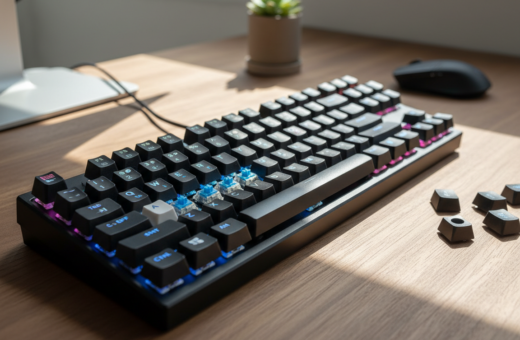
This review compares quiet options that aim to keep a mechanical keyboard’s character while cutting noise. The team tested well-known products like the Akko Penguin with silicone on the stem rails, Kailh Box Pink at 35 gf, and Gateron Aliaz models with forces from 60 to 100 gf.
They measured how actuation force and internal stem design shape the tactile feedback and overall sound. Each switch was used in long writing sessions to check consistency.
The key goal was to balance crisp feel with low noise in shared spaces. Tests looked at feel, feedback, and whether a silent tactile option could keep the mechanical switches experience intact.
Results showed one switch stood out by keeping snappy feedback from silicone dampers while staying quiet. Readers will learn which force ranges and stem designs work best silent tactile setups and why those choices matter in daily use.
Understanding the Need for Silent Mechanical Switches
Developers often begin with popular Gateron linear layouts when making lower-noise variants. That origin explains why red, black, yellow, and white linear models show up in many quiet keyboard switch designs.
Mechanical keyboards are loved for tactile character, yet some environments demand restraint. Modern silent switches let users keep a mechanical feel while they reduce noise in shared spaces.
Practical benefits include less distraction in offices and calmer late-night gaming sessions. A well-chosen linear switch can provide smooth travel and consistent force without the loud clack.
- Professionals want quiet operation that maintains a premium feel.
- Students and coworkers appreciate reduced noise during study or meetings.
- Gamers can keep focus without drawing attention in tight setups.
Understanding internal parts and dampening methods helps builders pick a keyboard switch that fits their needs. This knowledge guides choices that balance performance and a low profile in any workspace.
The Best Silent Switches for Typing
The following rundown focuses on tactile models that trim sound but keep precise feedback.
The Akko Penguin uses a sharp “P” shaped tactile bump and silicone dampeners on the stem rails. This yields a snappy feel with muted clack during long writing sessions.
Outemu Cream Yellow delivers a creamy, crisp tactility and a consistent keystroke that many writers prefer.
Durock Shrimp
Durock Shrimp offers a large tactile bump at the actuation point. A silicone ring around the stem rail slightly damps the sound while keeping a distinct feel.
TTC Bluish White and WS Silent Tactile
TTC Bluish White uses a high-hardness dampener in the bottom housing plus a silicone ring to control bottom-out feel. That prevents a mushy profile.
Wuque WS Silent Tactile reduces noise with relief cuts on the stem rails instead of silicone. The result is a quieter tactile switch without losing crisp feedback.
- Quick notes: these options reduce noise but are not completely silent.
- Choice depends on desired bump, actuation feel, and long-session comfort.
Analyzing Tactile Feedback and Typing Feel
Feeling the actuation point matters: a bump can guide speed and accuracy without relying on sound.
The Importance of Tactile Bumps
A tactile bump is the primary cue that tells a user when a key has registered. This physical marker shapes the overall typing feel on any keyboard.
Tactile feedback differs by design. The Akko Penguin uses a sharp, snappy bump that many compare to the Invyr Holy Panda. TTC Bluish White follows with a more rounded bump that feels softer on long sessions.
“A well-defined bump helps maintain rhythm and reduces errors during heavy use.”
- The WS Silent Tactile delivers a medium bump that is noticeable without being harsh.
- Durock Shrimp gives a smooth, distinct bump to mark the actuation point cleanly.
- Stem shape and leaf interaction determine how a tactile switch performs under real use.
Consistent feedback across all keys is vital. It keeps writers and gamers confident that every press will register, improving speed and comfort.
How Silencing Mechanisms Impact Sound Profiles
Design choices that absorb or disperse force shape a keyboard’s audible and physical profile. The silencing method directly alters the sound and the feel when users press key.
The TTC Bluish White pairs a high-hardness dampener in the bottom housing with a silicone ring around the stem to dampen sound. This combo reduces click and gives a firmer bottom-out.
By contrast, WS Silent Tactile uses relief cuts on the stem rails to disperse force. That way creates a sound profile close to a normal tactile switch without the mushy feel.
- The way a switch is built to dampen sound determines its final sound profile and the tactile bump the user senses.
- Silicone dampeners on the stem absorb impact but can soften the bump and change the press key feedback.
- Relief cuts disperse force and keep a crisper feel while they still dampen noise during heavy typing sessions.
“It is possible to quiet a keyboard without making the switch feel completely silent or unresponsive.”
Comparing Design Highlights and Build Quality
Small construction details often decide whether a keyboard feels premium or flimsy in daily use. This section contrasts two common silencing approaches and key housing traits that shape long-term performance.
Silicone Dampening vs Relief Cuts
The silicone method absorbs impact and often yields a softer bottom-out. Durock Shrimp uses a square silicone ring around the stem rail to give a firmer return than full blocks.
Relief cuts disperse energy along the stem and keep the tactile bump crisper. That choice preserves more of the original feel while cutting noise.
Housing Tolerances and RGB Compatibility
High housing tolerances reduce stem wobble and improve a premium feel. Outemu Cream Yellow uses a box-style dustproof stem to limit play and boost build quality.
TTC Bluish White has a transparent top housing for RGB shine-through and a dustproof stem design for stability. These design moves affect the sound profile and longevity.
- Durability: quality housing materials last through millions of presses.
- Choice: silicone or relief cuts depends on desired bottom-out feel and tactile identity.
- Protection: dustproof stems keep internal parts clean for consistent force and feel.
Evaluating Operation Force and Actuation
Operation force shapes how a key feels under the finger and how quickly a user can hit repeat strokes.
Light options like the Kailh Box Silent Pink sit at about 35 gf. That low actuation weight helps speed and reduces fatigue during long sessions.
Heavier ranges come from the Gateron Aliaz line, which offers 60, 70, 80, and 100 gf options. Those choices let someone tune the feel and feedback to match strength and accuracy goals.
The actuation point is where the tactile bump occurs and the keystroke registers. A clear actuation gives reliable feedback and helps users stop travel early.
- Evaluate operation force to match personal speed and endurance.
- Linear switch operation feels more uniform than a tactile switch with a bump.
- Spring weight and housing affect how actuation translates to real-world feel.
“A consistent actuation point is a hallmark of a high-quality keyboard switch.”
Alternative Methods to Reduce Keyboard Noise
Small changes beyond the switch can reshape how a keyboard sounds and feels. These tweaks help users tailor the sound profile without replacing every component.
The Role of Lubrication and Foam
Lubrication reduces scratchiness on the stem and leaf. A light application to the stem rails and housing noticeably smooths movement and lowers high-pitched sounds.
Case foam is an easy way to dampen sound. Placing foam between the plate and case or under the PCB creates a deeper, more muted profile during bottom-out and release.
- Lubrication: improves typing feel and calms harsh mechanical switches.
- Foam and desk mats: cut echo and reduce overall keyboard noise.
- Rubber O-rings: help at bottom-out but may make presses feel slightly mushy.
Combine methods—use foam with light lube and a desk mat—to get the quietest, most consistent experience. For gamers or professionals, pairing these mods with tactile or linear options gives the best balance of force and feedback.
“Proper lubrication and internal dampening can transform the sound and operation of any keyboard switch.”
Conclusion
A well-tuned tactile switch can keep noise low while preserving the cue that guides fast, accurate presses.
Silent tactile options offer a balanced approach: muted sound with clear tactile feedback. The TTC Bluish White and WS Silent Tactile show that a quieter profile does not require sacrificing a firm bump.
Choice of a keyboard switch comes down to preferred bump and the overall typing experience. Some prefer the sharp edge of the Akko Penguin, others the creamier feel of Outemu Cream Yellow.
To compare models and hear sample notes, review the curated top silent tactile list. It helps narrow choices toward the right keyboard switch and the best silent option for an individual’s needs.