Creating a calm work area starts with simple, proven tools. He or she can pair active noise cancelling headphones with soft foam panels to cut distracting office noise. This mix helps people stay focused during long tasks.
Managing the immediate environment matters for mental performance. Combining headphones, foam layers, and a desk pad gives a practical sound buffer. They block phone chatter, reduce ambient hum, and help sustain deep focus.
Whether at home or in a busy corporate setting, the right kit reshapes a small space into a calmer office zone. Using targeted white noise machines alongside noise cancelling gear can further improve concentration.
This guide outlines easy steps and select items to help people control their environment and protect their attention. Practical choices let them keep interruptions from dictating productivity.
The Impact of Noise on Productivity
Unpredictable sounds at work often force the brain to split attention and lose momentum. This creates higher cognitive load and reduces the amount of deep work people can do in a typical day.
Cognitive Load and Mental Performance
Research shows real effects. Banbury and Berry (1998) found that office speech and ambient interruptions cut mental arithmetic accuracy by nearly 30% in noisy settings.
“Office speech and background interruptions significantly impaired prose memory and arithmetic.”
When the team faces constant background sound, they report more errors and slower completion times.
The Role of Varying State Noise
Varying state sounds — especially speech — create spikes in cognitive demand. The University of Sydney found that 30% of cubicle workers are dissatisfied with the level of sound privacy in their offices.
- Vocal distractions raise stress and shorten deep-focus hours.
- Background sound without speech still fragments concentration.
- When people work from home, uncontrolled room sounds become frequent distractions.
Understanding these impacts helps design a calmer environment and improve daily output.
Essential Workspace Noise Reduction Accessories
Small, targeted tools can change how people hear and feel in busy rooms. Investing in workspace noise reduction accessories gives a simple way to reclaim focus in an office or home office.
The 3M Peltor X5A earmuffs are a robust solution for passive protection. They block many disruptive sounds and work well in offices and at home.
Adding foam panels and soft materials helps dampen sound that travels across the floor and between cubicle walls. This design choice improves the room environment and makes the space feel calmer.
- Provide multiple options so people can match control to the task.
- Combine earmuffs, foam, and a quiet retreat for on-feet staff.
- Use white noise sparingly to mask intermittent disruptions.
When items are chosen to work together, they form a practical system for managing sound in modern, busy offices. A tidy, sound-aware room can boost focus and protect mental energy.
Leveraging Active Noise Cancelling Headphones
Choosing the right noise cancelling headphones helps people carve out quiet time amid daily disruptions. These devices act as a primary tool to control the sound environment for focused work or clear calls.
Selecting the Right Model for Your Needs
When selecting a model, consider how much time the user spends on the phone and whether they need multi-device pairing. The Bose QC35 is ideal for professionals who switch between a phone and a computer during calls and multitasking.
The MOVSSOU Classic E7 offers active noise cancelling with Bluetooth pairing for hands-free calling. It is a cost-effective solution for people who want to cut low-frequency traffic and home sounds without a high price tag.
Active noise cancelling headphones also make it easy to play music or white noise while blocking distracting background sounds. They free up mental space and help reduce stress during long work sessions.
- The Bose QC35 supports multi-device pairing for smooth call management.
- ANC models block traffic and other low-frequency disruptions effectively.
- Choose based on call time, portability, and the specific noises you need to control.
Passive Sound Isolation Techniques
Simple, physical barriers often deliver the most reliable way to quiet a busy room.
3M Peltor X5A earmuffs are a proven option for passive noise protection. They block a broad band of sound without batteries or electronics, so they work consistently during long days in offices.
Foam earplugs offer a small, portable solution that helps someone creating a quiet space at home or at work. By sealing the ear canal, they stop many high-frequency sounds that active noise cancelling headphones can miss.
People often combine passive tools with white noise to craft a personal soundscape. Designing a room with soft foam panels and rugs further enhances the physical barrier and improves overall noise reduction.
- Reliable: no batteries, steady performance all day.
- Effective: blocks chatter and varied office noises.
- Flexible: pairs easily with headphones or a masking track.
Passive methods give a low-cost, low-maintenance way to protect focus and shape a calmer environment.
Combining Earplugs with Bone Conduction Technology
Pairing earplugs with bone conduction tech lets people stay reachable without sacrificing focus.
Aftershokz bone conduction headphones let users listen to audio while wearing earplugs that block external noise. This hybrid approach creates a personal sound bubble that still keeps important calls and alerts clear.
Professionals who face a lot of background noise during long periods of work find this setup especially effective. The transducers sit in front of the ear, so the user can keep awareness of the room while keeping phone conversations private.
- It is a versatile solution for blocking noise while still taking a call or playing music.
- At home, the pair lets someone use white noise or a playlist without losing the benefit of earplugs.
- Comfort is high for long time use, since there is less pressure than over-ear models.
- Many teams use this combination as a practical, on-the-job solution to stay productive in busy offices.
When combined thoughtfully, earplugs plus bone conduction headphones deliver clear audio and effective isolation. It is a simple, modern solution for people who need both calm and connection all day.
Utilizing White Noise for Sound Masking
A constant ambient tone can act as a stable backdrop that keeps sudden interruptions from stealing focus.
The HOUSBAY White Noise Machine offers 31 selectable sounds that help mask background conversations in a home office.
Using a dedicated white noise device creates a uniform sound floor. This makes brief chatter less jarring and easier to ignore.
Pairing white noise with noise cancelling headphones deepens the effect. The two tools together form a steady, predictable audio space for deep work.
- Many users find a low, steady hum more soothing than sudden office sounds.
- Volume is adjustable so the machine can cover nearby talk without being distracting.
- This masking method is proven to aid concentration on mentally demanding tasks.
Whether using an app or a standalone unit, white noise is a simple, effective component of a calmer work area.
Optimizing Office Layouts and Partitions
Designing clear circulation paths and quiet zones gives staff predictable places to work without interruption. Thoughtful layout changes are a practical way to lower ambient noise and improve focus for the whole team.
Installing Soundproof Partitions
Soundproof partitions act as a direct solution to curb distracting sound between desks. Adding tall, sealed panels or glass dividers reduces how much travel occurs across an open plan.
Many offices pair partitions with masking systems. Sound masking typically costs about $1–$2 per square foot to install in professional settings.
Acoustic Panels and Ceiling Tiles
Acoustic panels and suspended ceiling tiles absorb echoes and lower the overall sound level. Installing 130 square feet of suspended tiles averages $1,494 in cost—an investment that changes how speech and equipment carry.
Strategic Furniture Placement
Move storage units and bookcases to form soft barriers and increase distance between desks. Adding foam-backed seating and rugs helps too.
- Increase spacing between cubicles to create personal space.
- Use furniture as a passive buffer that reduces direct sound paths.
- Combine physical layout with headphones or white noise for layered protection.
Implementing Digital Solutions for Clear Communication
AI-driven audio tools remove distracting sounds so teams can focus on the message.
Krisp uses machine learning to strip background noise from a microphone during phone and video calls. It detects non-speech sounds and removes them in real time.
When someone uses headphones for a meeting, this software adds a final layer of protection against unwanted sounds. That keeps the voice crisp and the conversation professional.
Many professionals rely on these tools to preserve their image during remote meetings. They filter household sounds and street sounds so the speaker remains the focus.
- Easy integration with common conferencing apps makes setup fast.
- It works alongside hardware solutions like noise cancelling headsets for best results.
- Consistent, clear audio supports better collaboration and fewer misunderstandings.
For teams wanting hardware and software that complement each other, consult the guide to the best sound cancelling devices to pair devices with digital filters.
Enhancing Focus with Biophilic Design Elements
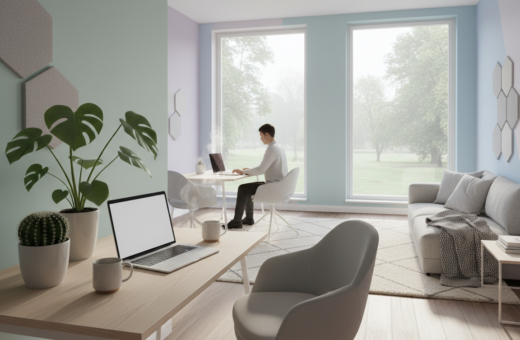
Bringing plants and daylight into a room supports clearer thinking and steadier concentration.
Natural elements lower stress and make a work area feel calmer. Adding a few resilient plants, like snake plants or pothos, helps soften harsh lines and adds a welcoming touch.
Studies show that green elements can boost attention and well-being. They also help mitigate the impact of office noise by shifting attention toward a pleasant, stable scene.
Biophilic design is functional as well as aesthetic. Thoughtful plant placement and natural light create a balanced space that supports longer periods of deep work.
- Choose low-light plants for inner rooms and larger pots near windows.
- Mix textures—leafy plants, wood tones, and soft textiles—to reduce visual harshness.
- Keep maintenance simple so the design stays sustainable for teams.
“When people feel connected to nature, their cognitive resilience improves.”
Practical tip: match plant size to room scale and circulation paths so the area stays productive and inviting. Small, natural changes often yield meaningful gains in focus and mood.
Establishing Office Noise Policies
Formal guidelines for calls, meetings, and device use create a calmer room for focused tasks.
Document clear expectations so every person knows when to use headphones and where to take a call. This reduces unpredictable noises and lowers stress across the team.
Policies should encourage practical tools, like white noise machines and approved noise cancelling headsets, as part of a broader sound management plan. When rules are written down, people follow them more consistently.
Include simple rules: designate quiet zones, set meeting norms, and list acceptable devices for shared areas. Back the guidance with research that shows clear expectations improve respect for quiet spaces.
- Define where phone calls belong.
- Recommend headphones for long focus hours.
- Use the policy as a long-term solution to protect productivity.
“Clear policies turn good intentions into predictable behavior.”
For practical implementation and device guidance, see this resource on office noise reduction.
Conclusion
A calm room starts with simple steps that protect focus and support clear calls. Combining physical tools with smart office policies gives people practical control over their day.
Whether using active headphones or passive foam panels, the aim remains the same: safeguard attention and improve task flow. Optimizing layout and adding digital filters for calls keeps meetings clear and productive.
Creating a quieter offices culture is a team effort. Clear rules, paired solutions, and regular check-ins help sustain long-term reduction in interruptions. Implementing these strategies supports productivity and lowers stress across the staff.